

December 09, 2025
How to Brew the Perfect Cup of Black Tea: A Step-by-Step Guide
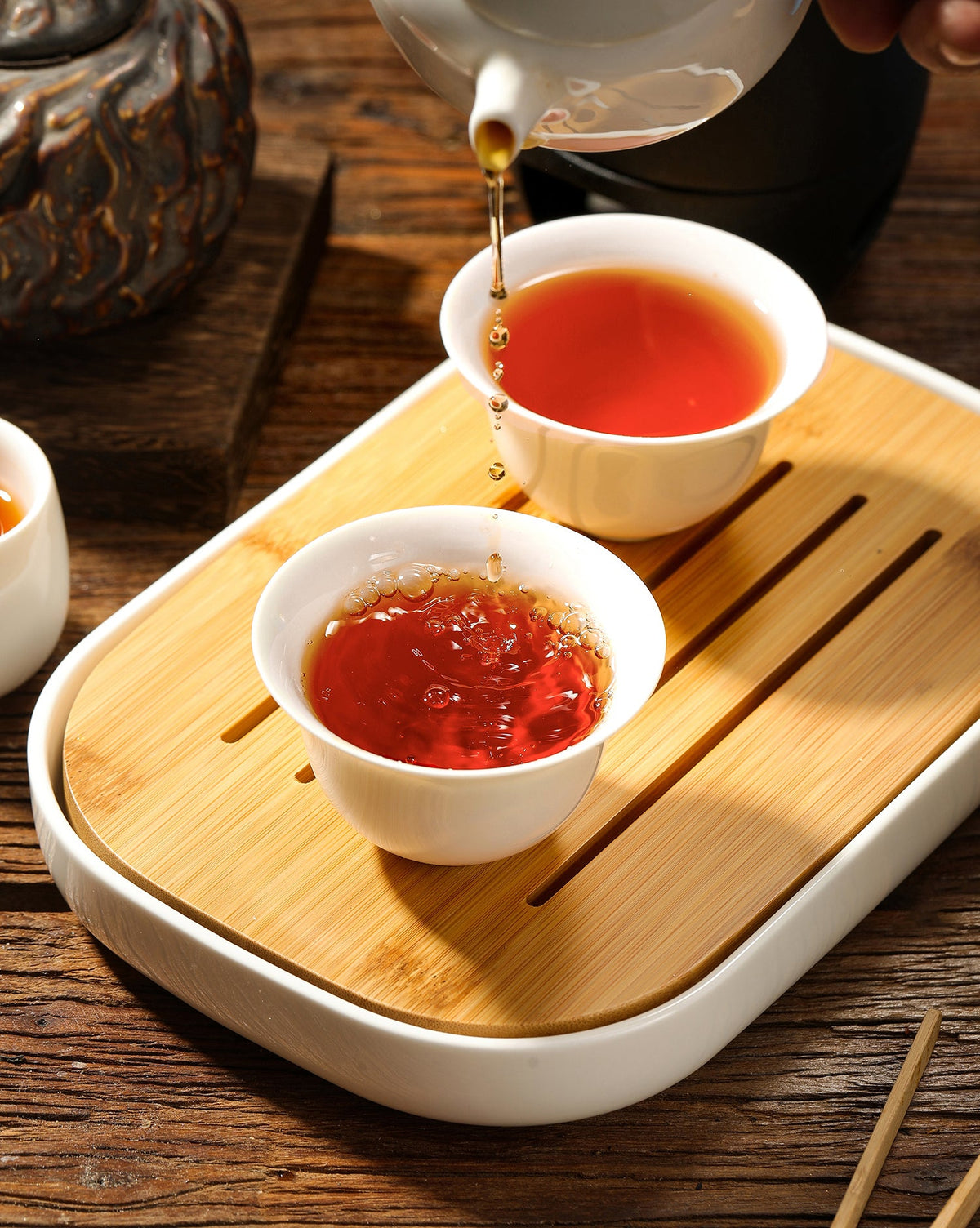
There’s something deeply comforting about a well-brewed cup of black tea—its rich aroma, amber hue, and soothing warmth make it a beloved beverage worldwide. Whether you’re new to tea or looking to refine your technique, this guide will help you unlock the full potential of your leaves, from selecting the right teaware to mastering brewing time.
Step 1: Choose Your Teaware Wisely
The right vessel can enhance your tea experience. Here’s a quick comparison:
|
Teaware |
Best For |
Notes |
|---|---|---|
|
Glass Teapot |
Visual learners & delicate teas (e.g., Zhen Shan Xiao Zhong) |
Allows you to watch the leaves unfurl and the color develop. |
|
Ceramic Gaiwan |
Precision brewing & high-aroma teas (e.g., Qi Men Hong Cha) |
Retains heat well and offers control over infusion speed. |
|
Yixing Teapot |
Aged or robust teas (e.g., Dian Hong) |
Porous clay absorbs flavors over time—ideal for dedicated tea lovers. |
Tip: Preheat your teaware by rinsing it with hot water. This maintains temperature and helps release the tea’s aroma
.
Step 2: Master Water Temperature
Water temperature is critical. Too hot, and the tea turns bitter; too cool, and the flavor falls flat.
-
Ideal Range: 90–95°C. Let boiling water rest for 1–2 minutes after reaching 100°C
. -
Adjust by Tea Type:
-
Tender leaf teas (e.g., Zhen Shan Xiao Zhong): 90°C to preserve delicate notes.
-
Bold leaf teas (e.g., Dian Hong): 95°C to extract full-bodied richness.
-
Pro Tip: Use a temperature-controlled kettle for consistency
.
Step 3: Measure Your Tea
A balanced ratio ensures harmony between strength and subtlety.
-
Standard Ratio: 1:50 (3g tea per 150ml water)
. -
Adjust to Taste:
-
Lighter brew: 2g leaves.
-
Stronger cup: 4g leaves.
-
-
Leaf Type Matters: Reduce compact teas (e.g., Dian Hong) by 10%; use 1/3 less for broken leaves
.
Step 4: The “Rinse” (A Necessary Step)
Pour hot water over the leaves, swirl for 3–5 seconds, and discard the liquid. This “awakening” rinse:
-
Removes impurities.
-
Hydrates the leaves for even extraction.
-
Prevents bitterness in later infusions
.
Step 5: Timing the Infusion
Patience here rewards you with depth and nuance.
-
First Infusion: 10–30 seconds. Look for a bright amber color.
-
Subsequent Infusions: Add 5–10 seconds each round.
-
Robust Teas (e.g., ancient tree black tea): Can steep 5–7 times
Avoid Over-Steeping: Extended brewing releases excessive tannins, leading to bitterness
.Why Black Tea? A Note on Origin & Value
As a fully fermented tea, black tea offers a mellow, smooth profile. Among China’s renowned growing regions, Fengqing County in Yunnan stands out for its exceptional value. The old-tree black tea from this area is known for its consistent quality, generous yield, and affordability—making it an excellent daily choice for tea enthusiasts
.
Parting Tip: Savor Mindfully
Brewing tea is as much about the process as the result. Experiment with ratios and timing to find your perfect cup. And remember—the best tea is the one you enjoy most.
Have a favorite black tea variety or brewing hack? Share it in the comments below!